Serrated Knife Collection – Steel and Handle Designs
Explore serrated knife models at Seward Knives and compare tooth patterns, blade profiles, steel listings, handle materials, dimensions, finishes, and current product options. Open each product page for its published specifications.
Serrated Knife Profiles and Materials
Different Tooth and Edge Patterns
Products in this collection use several serration shapes, tooth spacing patterns, blade lengths, tip profiles, spine designs, and surface finishes.
Steel and Handle Listings
Current product names describe stainless steel, VG10, Damascus-pattern, and other steel listings with wood, rubber-wood, plastic, ring, and mixed handle formats.
How to Compare Serrated Knife Models
Review Blade and Edge Geometry
Compare blade length, width, tooth pattern, tip shape, overall dimensions, handle proportions, and product weight where those details are listed.
Check Materials, Finish, and Options
Review the published steel, handle material, surface pattern, color, product images, selectable configurations, dimensions, and current price for each listing.
Explore Related Knife Collections
Boning Knife Designs
Browse the boning knife category to compare straight, curved, compact, and patterned-steel blade profiles.
Fixed Blade Knife Collection
Explore the main fixed blade knife category for more blade shapes, handle formats, finishes, and current product details.
Serrated Knife FAQs
What edge patterns are included?
The collection includes several serration shapes and tooth-spacing patterns with different blade profiles, lengths, steels, handles, and finishes.
Do all models use the same steel?
No. Product names describe several steel listings and constructions. Confirm the exact material, handle, measurements, finish, and options on the current page.
Where can I browse every current model?
Use the product grid above or return to this serrated knife collection to review the current selection.


Hot-selling stainless steel serrated knife is sharp
 A
 B
 C

New style serrated knife with rubber wood handle
 A
 B

Small saw multi-function serrated knife
 A
 B

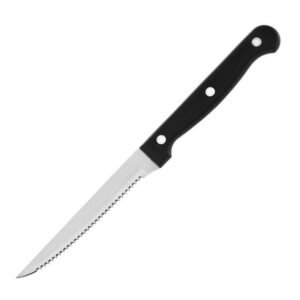
Stainless steel serrated knife with plastic handle
 A
 B
 C
 D

Stainless steel serrated knife with practical wooden handle and plastic handle
 A
 B
 C
D

Stainless steel sharp serrated knife
 A
B

Wooden handle serrated knife luxury French fruit knife
 A
 B
 C
 D
 E
Unique Serration Geometry and Blade Design
A serrated knife is defined by its patterned cutting edge, composed of uniform teeth or scallops. This intricate serration pattern is a highlight for collectors who appreciate technical blade design. Different models may feature fine, medium or aggressive serration styles, showcasing variations in craftsmanship and edge formation.
Materials, Finishes and Blade Construction
Our serrated knife selection includes a variety of steels, such as stainless, carbon and alloy steels, chosen for edge stability and durability. Handles may incorporate materials including G10, micarta, wood, metal or composites. Surface finishes range from polished to stonewashed, bead-blasted or textured coatings—each adding visual depth and collectible character.
Ideal for Collectors, Display and Appreciation of Blade Engineering
Because serrated knives combine practicality with visually striking edge work, they are popular among knife collectors and enthusiasts. Their detailed tooth geometry and manufacturing techniques make them attractive pieces for display cases, private collections or for studying different blade-making traditions.
Precision-Cut Serrations and Engineering Detail
The serration pattern requires exact machining or hand-grinding to ensure uniform depth and spacing. This engineering process is appreciated by collectors who value attention to detail and blade artistry. Serrated edges often reveal fine craftsmanship when examined closely.
Durable Fixed-Blade Construction for Long-Term Stability
Serrated knives in this category feature solid fixed-blade construction, offering long-term structural reliability. Without moving parts, these blades maintain consistent alignment and reduce the maintenance needed over time — an important factor for long-lasting collectible pieces.
Versatile Edge Design for Specialized Cutting Tasks
While serrated blades are known for their unique cutting characteristics, our focus here is on their design value: the way the tooth structure interacts with the material, the smooth transition between serrated and straight edges, and how these shapes demonstrate advanced blade-making techniques.
Attractive Display Pieces with Visual Texture and Depth
The saw-style edge of a serrated knife creates visual texture that stands out among other blade types. When displayed in a collection, serrated knives add variety and technical interest. Their combination of shape, finish and materials makes them appealing as decorative or showcase items.
Craftsmanship Appreciation and Material Study
Serrated blades provide an opportunity to study blade geometry, edge retention methods, heat-treating processes and steel behavior. Collectors often appreciate them as examples of how design and engineering come together in knife-making.