Boning Knife Collection – Steel and Handle Designs
Explore boning knife models at Seward Knives and compare blade profiles, steel listings, handle materials, dimensions, finishes, edge shapes, and current options. Open each product page for its published specifications and images.
Boning Knife Profiles and Materials
Straight and Curved Blade Shapes
Products in this collection use several straight, tapered, curved, and compact blade profiles with different lengths, widths, tips, spines, and finishes.
Damascus and Stainless Steel Listings
Current product names describe Damascus-pattern, VG10, stainless steel, M42, and other steel listings. Confirm the exact material, construction, and finish on the individual product page.
How to Compare Boning Knife Models
Review Blade and Handle Proportions
Compare blade length, overall length, profile, handle shape, grip material, product weight where listed, and the published measurements for each model.
Check Handle Materials and Finish
Listings show G10, wood-style, ring-handle, and other handle formats with several blade finishes. Review current images, specifications, options, and price before choosing.
Explore Related Knife Collections
Damascus Knife Designs
Browse the Damascus knife category to compare additional patterned-steel listings, handle materials, profiles, and finishes.
Fixed Blade Knife Collection
Explore the main fixed blade knife category for more blade profiles, handle formats, sheaths, and current product details.
Boning Knife FAQs
What blade profiles are available?
The collection includes straight, tapered, curved, compact, and ring-handle listings with different dimensions, steels, edge shapes, and finishes.
Do all models use the same steel?
No. Product names describe several steels and constructions. Confirm the exact specification, handle material, measurements, and finish on the current listing.
Where can I browse every current model?
Use the product grid above or return to this boning knife collection to review the current selection.


Damascus Boning Knife
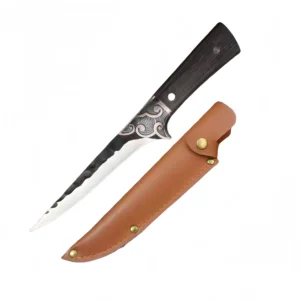
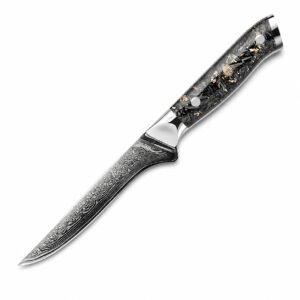
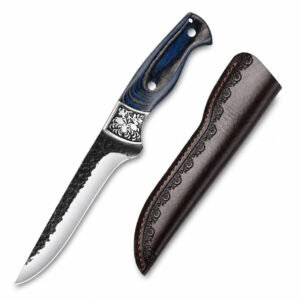
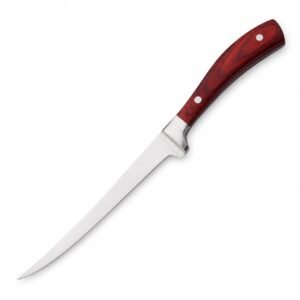


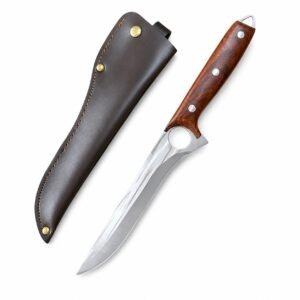
Blade Shape, Control, and Mechanical Characteristics
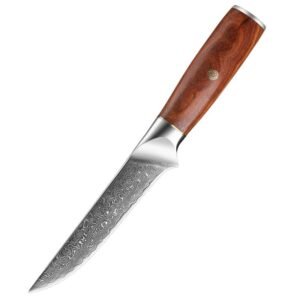
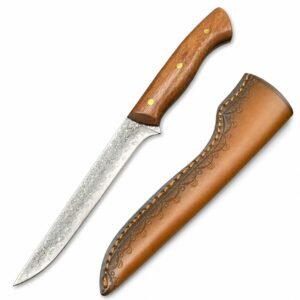
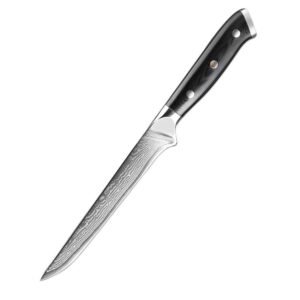
A boning knife features a narrow, tapered blade designed to provide precise movement around joints and along natural contours of meats. Blade flexibility varies from stiff to semi-flex, allowing users to choose the level of control they prefer for different tasks. The geometry—thin spine, pointed tip, and fine edge—enhances maneuverability and ensures clean, efficient cuts. Construction quality, including edge retention and smooth transitions between blade and handle, contributes to the knife’s reliability in kitchen environments.
Materials, Durability, and Manufacturing Quality
Quality boning knives are typically crafted from stainless steel or high-carbon steel, chosen for their strength, corrosion resistance, and ability to maintain a sharp edge. Handles may use materials such as POM, wood, G10, or polymer composites, each offering durability and improved grip. Careful forging or precision machining ensures blade stability, consistent hardness, and a refined surface finish. These characteristics collectively influence performance, longevity, and ease of maintenance.
Ergonomics, Balance, and User Comfort
Ergonomics play a major role in the effectiveness of a boning knife. Handle contours are shaped to follow the natural curve of the hand, reducing fatigue during extended preparation sessions. A well-balanced design allows smooth, controlled movements, while textured or non-slip surfaces help maintain a secure grip, even when working with moist ingredients. Balance between the blade and handle enhances accuracy and supports safe, confident handling.
Surface Finish and Visual Design
Boning knives may feature polished, satin, brushed, or coated finishes that improve corrosion resistance and aesthetics. Blade markings, spine shape, and handle patterns contribute to the knife’s professional appearance.
Blade Flexibility and Performance Characteristics
The degree of blade flexibility is essential to a boning knife’s function. Stiffer blades offer control for larger cuts, while more flexible blades allow precise trimming and shaping of delicate ingredients.
Application Scope and Responsible Use
A boning knife is primarily designed for food preparation, including trimming, deboning, and portioning meats or fish. Users should follow proper handling and kitchen safety practices during operation and maintain the blade appropriately to ensure long-lasting performance.