
Butterfly Knife Collection – Balisong Folding Designs
Browse butterfly knife and balisong knife models at Seward Knives. Compare two-handle folding layouts, pivot details, blade profiles, handle finishes, dimensions, and model specifications across the collection.
What Is a Butterfly Knife?
A butterfly knife, also called a balisong knife, uses two handles that rotate around the blade tang. When closed, the handles cover the blade; when open, they create the distinctive two-handle grip found across this collection.
Butterfly Knife Design and Build
Handles, Pivots, and Balance
Handle shape, pivot construction, balance, and overall dimensions define how each butterfly knife looks and feels. Review the product details to compare handle layouts, pivot hardware, materials, and listed measurements.
Blade Profiles, Finishes, and Dimensions
Blade profile and finish help distinguish each balisong knife model. Use the photos and specifications on each product page to compare blade shape, finish, handle style, length, and other listed options.
Butterfly Knives for Sale
Compare Balisong Knife Models
Shop butterfly knives by comparing product photos, handle designs, pivot details, finishes, dimensions, and current model information. The collection makes it easier to narrow the options to the style you want to review.
Review Current Product Details
Open an individual listing to check its current price, available options, images, and exact specifications before adding a butterfly knife to your selection.
Butterfly Knife FAQs
What is a butterfly knife?
A butterfly knife is a folding knife with two handles that rotate around the blade tang and fold around the blade when closed.
What is a balisong knife?
Balisong knife is a common name for a butterfly knife. Both terms describe the two-handle folding format used in this category.
Where can I compare related knife categories?
Compare the switchblade knife and stiletto knife collections for additional folding designs and model details.


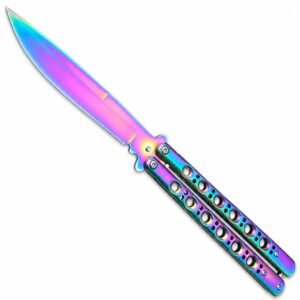
5 Inch Closed Scorpion Balisong Butterfly
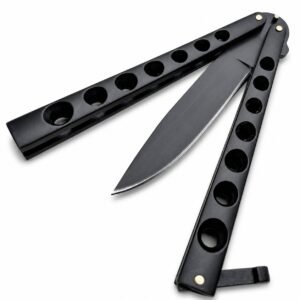
5.25 Inch Closed Helix Butterfly Balisong Knife

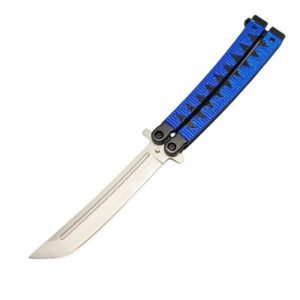
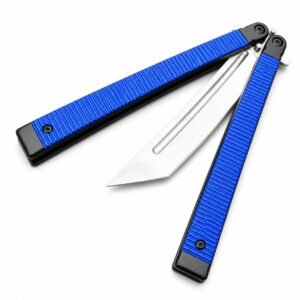
9.5Inch Samurai Japanese Style Tanto Blade Butterfly Knife Balisong

Balisong Butterfly Knife UK
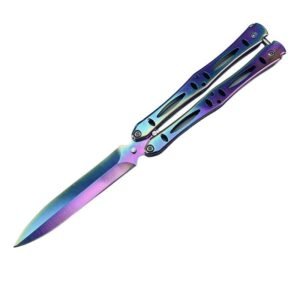 Color
 silver
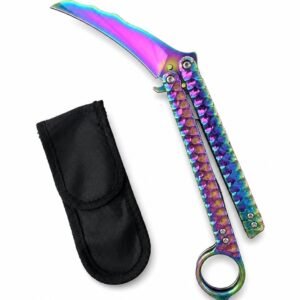
Balisong Karambit Eagle Claw Variation Fling Knife Color Titanium Edition
 A
 B
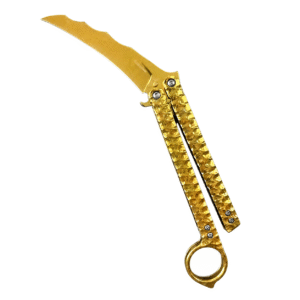 C
 D

Balisong Knife Black

Balisong Knife Gold
What is a Butterfly Knife – Design and Mechanics
A butterfly knife features two handles that rotate around the blade’s tang: when closed, the blade is safely concealed within the handles; when opened, the handles swing out to form a stable grip. Some butterfly knives are built with traditional “channel construction,” while others use “sandwich construction” — differences that influence feel, balance, durability, and maintenance. This distinctive design not only creates a compact folding knife but also enables fast one-handed deployment — which for many users becomes part of the appeal.
Uses & Appeal – Utility, Collection, and Skill
Although originally conceived as practical folding knives, butterfly knives have evolved in popularity among collectors and knife-enthusiasts for their craftsmanship, balance, and “flipping” potential. For some users, they serve as compact utility knives suitable for everyday cutting tasks — when legally permitted. The design allows discreet carry (when permitted) and safe storage when closed. For others, butterfly knives represent a collectible or hobby tool — prized for their mechanics, materials (steel, handle scales, finishes), and sometimes ornate craftsmanship.
Important Considerations — Legality & Responsible Ownership
Because of their potential for quick deployment and concealability, butterfly knives are subject to strict regulation or outright bans in many regions. Before purchasing or carrying a butterfly knife, it’s essential to check the laws and regulations in your area — as what is legal in one place may be prohibited in another, especially regarding carrying in public. If legal, treat any knife — including a butterfly knife — with respect, maintain correct handling practices, store it securely, and always follow safety guidelines.
Anatomy and Build — What Makes a Quality Butterfly Knife
A well-made butterfly knife includes robust pivot joints, a secure latch mechanism (to lock handles together when closed), and a blade that folds cleanly into the handle channels without binding or rattling. Handles may be made from materials such as G-10, aluminum, steel, wood, or composite — affecting weight, balance, grip, and durability. The blade steel quality also matters for edge retention, corrosion resistance, and general cutting performance.
Advantages — Compact, Concealable, Versatile
When folded, a butterfly knife is compact and easier to store than fixed-blade knives. Because the blade is hidden inside the handles, it’s less bulky and more discreet for storage. This makes it convenient for collectors or users who need a portable knife. For users allowed to use them, butterfly knives can serve as practical folding knives for tasks such as cutting rope, opening parcels, slicing materials — functions similar to many pocket knives, but with a distinctive feel and deployment method.
Collectors & Enthusiasts — Flipping, Mechanics, and Style
Many butterfly-knife owners appreciate the flipping techniques: the artful motions of opening/closing, handle manipulation, and the satisfying mechanical feel. For some, mastering the “flipping” becomes a hobby. High-end butterfly knives may feature premium materials, precise machining, custom finishes — making them popular among collectors who value craftsmanship rather than utility.