

Brass Knuckles Knife – Design, Materials & Responsible Context
Learn about brass knuckles knife designs, materials and historical context. Explore engineering features, construction quality and legal awareness related to this category.

5.25 Inch OTF Knife – Machined Knuckle Trench, Matte Black
KNUCKLE TRENCH Knife
Overall Length: 9.00“ Blade Length: 3.50″ Blade Thickness: 0.12″ Blade Steel: D2 Blade Style: Drop Point Blade Finish: Satin Edge Type: Plain Handle Length: 5.50″ Handle Thickness: 0.50″ Handle Material: Aluminum Handle Color: Black Weight: 4.90 oz. User: Right Hand, Left Hand Pocket Clip: Tip-Down Knife Type: OTF Automatic Opener: Thumb Slide
5.25″ Machined Knuckle Trench OTF Knife – Matte Green
OTF KNUCKLE TRENCH Knife
- Overall Length: 9.00“
- Blade Length: 3.50″
- Blade Thickness: 0.12″
- Blade Steel: D2
- Blade Style: Drop Point
- Blade Finish: Satin
- Edge Type: Plain
- Handle Length: 5.50″
- Handle Thickness: 0.50″
- Handle Material: Aluminum
- Handle Color: Green
- Weight: 4.90 oz.
- User: Right Hand, Left Hand
- Pocket Clip: Tip-Down
- Knife Type: OTF Automatic
- Opener: Thumb Slide

5.5 INCH knuckle flick knife

9″ Tactical Trench OTF Knife with Knuckle Handle


Biker Style OTF Knuckle Knife – Blue Graphic Handle
BIKER Knuckle OTF Knife
Overall Length: 9 Inches Blade Length: 3.5 Inches Closed Length: 5 Inches Blade Material: 440 Stainless Steel Blade Thickness: 2mm Sharpness & Functionality: Sharp, Novelty Cutter Blade Features: Spear Point Sharp Blade Handle: Gold with Carbon Fiber Inlay Other Features: Out The Front, Switch Toggles In and Out, Glass Breaker Finish: Black and Silver Blade, Gold & Carbon Fiber Inlay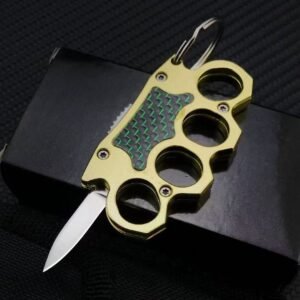
Brass Knuckles knife

Punisher OTF Knuckle Knife – Black Skull Handle
PUNISHER OTF Knuckle Knife
Overall Length: 9 Inches Blade Length: 3.5 Inches Closed Length: 5 Inches Blade Material: 440 Stainless Steel Blade Thickness: 2mm Sharpness & Functionality: Sharp, Novelty Cutter Blade Features: Spear Point Sharp Blade Handle: Gold with Carbon Fiber Inlay Other Features: Out The Front, Switch Toggles In and Out, Glass Breaker Finish: Black and Silver Blade, Gold & Carbon Fiber Inlay

Red Trench OTF Knuckle Knife – US1918 Style
Red Trench OTF Knife US1918
Red Trench OTF Knife Us 1918 -TKK238-011Overall Length: 9 InchesBlade Length: 3.5 InchesBlade Material: 440 Stainless Steel,Powder coated black finishBlade Style: DaggerHandle Length: 6 Inches HandleMaterial: Cast metal, Heavy duty constructionIncludes: Pocket Clip, Glass breaker, belt sheath.
What Is a Brass Knuckles Knife – Design & Engineering Perspective
A brass knuckles knife merges a gripping form with an attached blade. The design combines structural strength with ergonomic considerations to create a compact tool that historically has appeared in various cultural contexts. From an engineering perspective, understanding how handle contours, weight distribution, and blade integration work together helps illustrate general principles of mechanical design and form factor optimization in compact tools.
Materials, Construction Quality & Functional Features
Brass knuckles knife designs typically use durable metals — such as brass, stainless steel, or alloy steels — paired with robust handle materials that provide rigidity and balance. Precision machining and finishing processes affect the overall surface quality and structural stability. These materials and construction choices are shared across many high-quality handheld tools, reflecting careful selection for durability, corrosion resistance, and tactile comfort.
Historical & Cultural Context of Folding & Integrated Grip Tools
Tools with integrated grip profiles (such as braced handles or unique hand-fitted designs) have evolved in different cultures for a variety of purposes, including utility tasks and symbolic representation. Examining the historical and cultural influences behind forms like the brass knuckles knife helps contextualize how tool shapes change over time and adapt to new materials, manufacturing techniques, and aesthetic trends.
Legal Awareness & Responsible Understanding
Regulations covering objects like a brass knuckles knife vary widely by country, state, and local jurisdiction. In many regions, certain configurations of handheld knives and grip-reinforced tools are regulated or restricted. It is essential for visitors to research and comply with the applicable local laws before acquiring or handling any such item. Understanding these legal frameworks supports responsible awareness and ensures tools are handled in appropriate and lawful settings.
Integrated Grip & Handle Design Principles
The ergonomic grip design seen in brass knuckles knife-style profiles emphasizes secure handling and structural contact with the hand. These design choices are found in a variety of compact handheld tools where comfort, control, and balance are important—such as multi-purpose utility tools, hiking implements, and mechanical tool handles.
Blade Integration & Structural Balance
Integrating a blade into a handle with significant surface area requires careful mechanical design. Blade thickness, tang construction, pivot mechanics (in folding versions) and handle reinforcement all contribute to consistent performance and structural soundness. These principles are applied across many engineered folding mechanisms found in tools.
Material Selection & Finishing Quality
Metals used in brass knuckles knife constructs — such as brass, stainless steel, or high-strength alloys — are selected for their mechanical properties. Surface finishes like polishing, matte coating, bead-blasting or anodizing enhance both tactile feel and resistance to environmental factors. Attention to material properties and finishing techniques reflects broader craftsmanship considerations in quality tool design.