
Kukri Knife Collection – Curved Fixed Blade Designs
Explore kukri knife models at Seward Knives and compare curved blade profiles, handle materials, steel listings, dimensions, sheaths, finishes, and current options. Open each product page for its published specifications.
Kukri Knife Profiles and Construction
Forward-Curved Blade Shapes
Models in this collection feature forward-curved blade profiles with different lengths, widths, spine shapes, finishes, and overall proportions. Use the product gallery and listed measurements to compare them.
Handle and Sheath Formats
Handle shapes, grip materials, fasteners, decorative details, and sheath descriptions vary by model. Check the individual listing for the exact materials and included components.
How to Compare Kukri Models
Review Blade and Handle Proportions
Compare blade length, curve, width, overall length, handle shape, grip texture, and product weight where those details are provided.
Check Steel, Finish, and Product Options
Current listings describe several steels and finishes, and some products offer selectable configurations. Confirm materials, images, dimensions, sheath details, options, and price on the product page.
Explore Related Knife Collections
Fixed Blade Knife Designs
Return to the main fixed blade knife category to compare more blade profiles, handle designs, sheaths, and current product details.
Bushcraft Knife Collection
Browse the bushcraft knife category for additional outdoor fixed-blade profiles and listed configurations.
Kukri Knife FAQs
What defines a kukri knife?
A kukri knife is recognized by a forward-curved blade profile. Exact blade geometry, steel, handle material, dimensions, finish, and sheath format vary by model.
How do the available models differ?
Compare blade curve, dimensions, listed steel, handle shape, grip material, finish, sheath description, product images, and current options.
Where can I browse every current model?
Use the product grid above or return to this kukri knife collection to review the current selection.
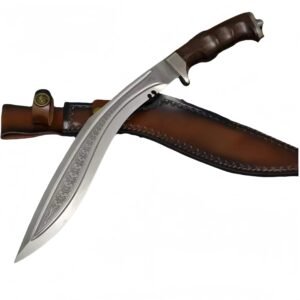
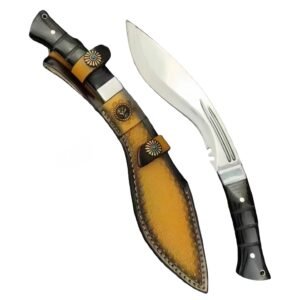
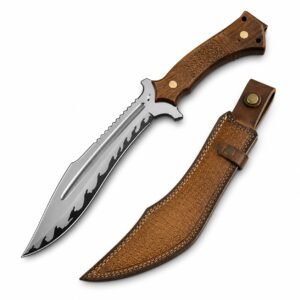
9Cr18Mov one-piece steel dog leg knife sheath with hand-embossed cowhide holster
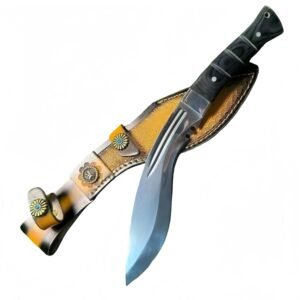
9Cr18Mov one-piece steel dog leg knife with hand-embossed leather sheath
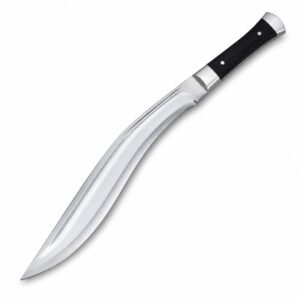
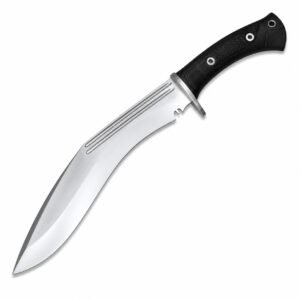
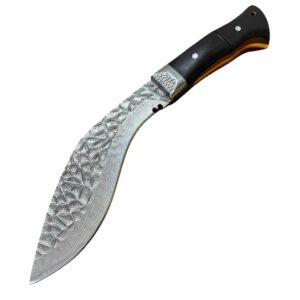
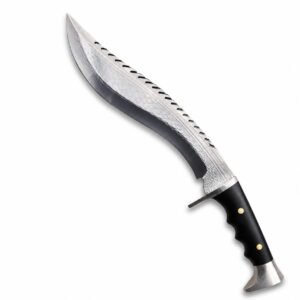
Damascus-Nepal Supreme Dog Leg Knife
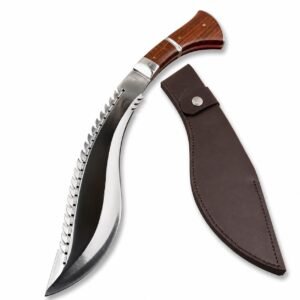

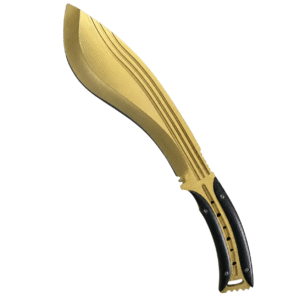
Dragon Scale kukri Knife, A8 Alloy Steel One-Piece kukri Knife
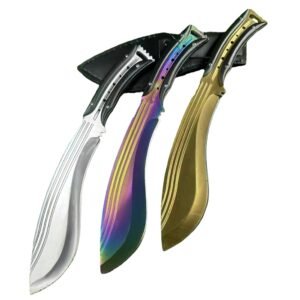
Evil Dragon kukri Knife
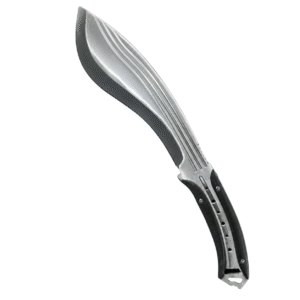 A
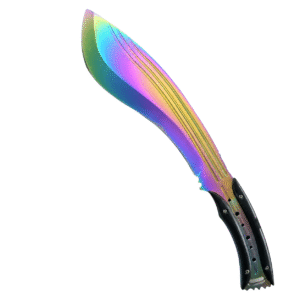 B
 C
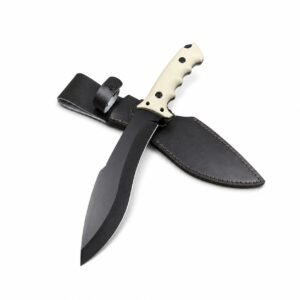
Falcon Dog Leg Kukri Knife
What Makes a Kukri Knife Unique – Blade Shape, Balance & Functionality
A kukri knife stands out with its distinctive inward-curved blade and forward-weighted balance, giving it exceptional chopping and cutting power. This curved geometry allows the cutting “belly” of the blade to bite in forcefully on draw-cuts and chopping motions — making it more efficient than straight-bladed knives or machetes for tasks like splitting wood, clearing brush or heavy-duty cutting. Traditionally, the kukri combines the functions of a knife, machete, and small axe — a multifunctional tool optimized for outdoor, bushcraft, and survival use.
Advantages of a Kukri Knife — Power, Versatility & Durability
The forward-weighted blade structure gives the kukri knife enhanced chopping force, meaning less effort is needed for heavy tasks such as splitting kindling, cutting thick branches, or processing wood. Because of its sturdy fixed-blade construction, a kukri knife offers durability and reliability even under repeated heavy use. It’s also versatile — able to perform a range of tasks from chopping, cutting, carving, shelter building, food preparation, to survival tasks — making it a great all-purpose outdoor knife.
Ideal Use Cases – Camping, Bushcraft, Survival, Wood Processing & Outdoor Work
A kukri knife is ideal for: Splitting firewood or kindling for campfires or home fireplaces. Clearing brush, thick vegetation, or undergrowth when hiking or in the wild. Shelter building, carving tent stakes, chopping branches, or preparing wood for camp. Preparing game or food outdoors — skinning, cutting meat, processing wood or food supplies. Survival situations, outdoor expeditions, bushcraft and general utility tasks where reliability and multi-functionality matter
Heavy-Duty Cutting Power and Efficient Chopping
Thanks to its curved blade and forward balance, the kukri knife delivers strong chopping and slicing capability. This makes wood processing — splitting logs, chopping branches — faster and easier compared to straight-blade knives or standard machetes. The “belly” of the kukri blade gives a deeper, more forceful cut on swinging strikes, improving effectiveness with less force, which is especially useful in rugged outdoor or survival contexts.
Multipurpose Utility – From Chopping to Detailed Tasks
Though strong for heavy chopping, the kukri knife remains versatile: the narrower portion of the blade (closer to the handle) provides control for finer cutting, carving, food preparation or delicate tasks. This dual functionality — heavy cutting at the tip and precise slicing near the handle — makes the kukri an excellent all-round tool for camping, bushcraft, survival gear or outdoor kits.
Durable Construction & Reliability in Harsh Conditions
Well-made kukri knives use quality steel and full-tang (or strong fixed-blade) construction to withstand repeated heavy use — chopping, striking, cutting — without breaking or losing integrity. Their design makes maintenance straightforward: no hinges or moving parts, easy to clean, sharpen, and ready for heavy-duty tasks — ideal for rough outdoor conditions, survival trips, or long-term bushcraft use.
Historical Legacy, Cultural Heritage & Iconic Design
The kukri knife traces its roots to the hills of Nepal and holds deep cultural significance: it is historically associated with the warriors known as Gurkhas and remains a symbol of heritage and resilience. Owning a kukri not only gives you a practical outdoor tool, but also a piece of history — a blade design that has endured centuries for its effectiveness and craftsmanship.