

Flick Knife Stiletto Knife – Design, Mechanical Structure & Craftsmanship Overview
Discover Flick knife stiletto knife designs with insights into blade shape, folding mechanisms, materials and craftsmanship. An educational look at engineering and historical evolution.

13 Inch Big Boy Auto Italian Stiletto Switch Blade Black Pearl

13 Inch Italian Stiletto Switchblade Knife – Automatic
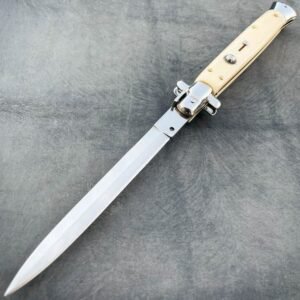 Beef Bone Color Handle
  Beef bone colored handle and blue blade
 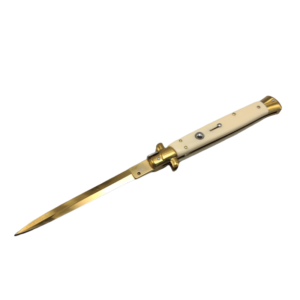 Beef bone colored handle and gold blade
  Beef bone colored handles and colored blades
 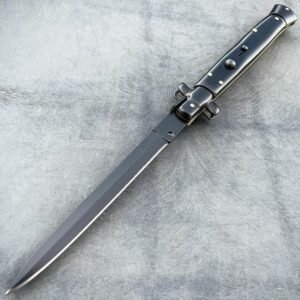 Black handle and black blade
 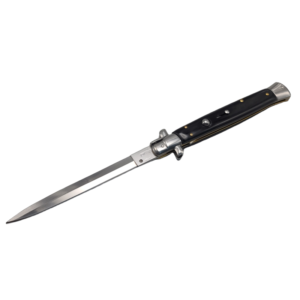 Black handle and white blade
 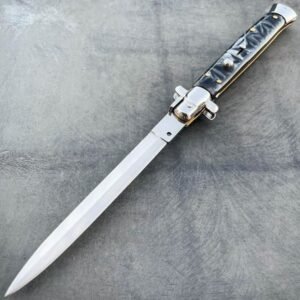 Black Pearl Handle and White Blade
  Blue Pearl Handle
  Padauk Wood
  White Pearl Handle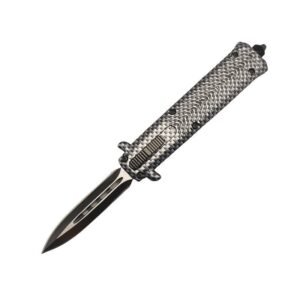
4.15 Inch Italian Stiletto Knife – Dual Action OTF (Silver)
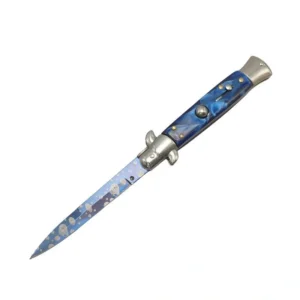
8.75 Inch Italian Stiletto Knife – Blue Handle Switchblade
A 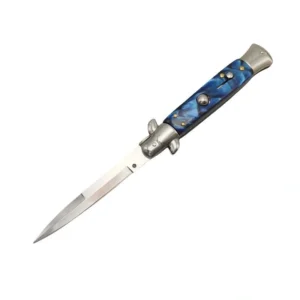 B
B 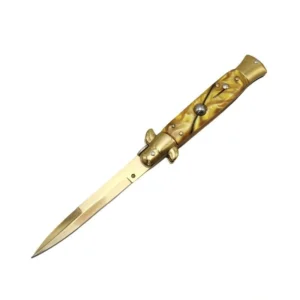
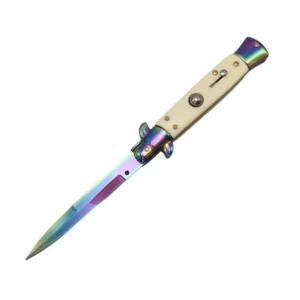
8.75 Inch Italian Stiletto Knife – Osseous Handle Flick Knife
A 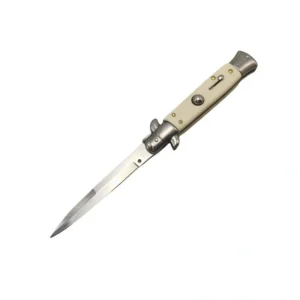 B
B 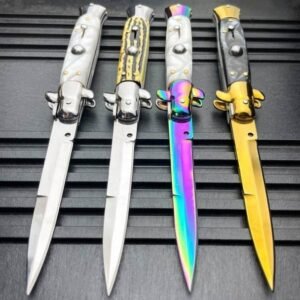
8.75 Inch Italian Stiletto Switchblade Knife – Automatic
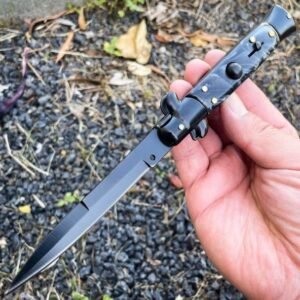
8.75 Inch Italian Stiletto Switchblade Knife – Black Pearl Handle

8.75 Inch Italian Stiletto Switchblade Knife – Kris Blade
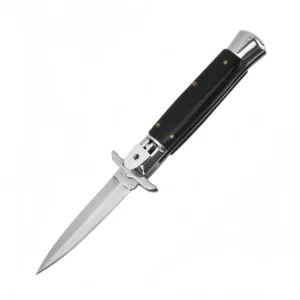
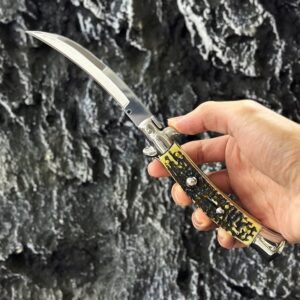

9 Inch Italian Stiletto Knife – OTF Automatic (Flag Handle)
Understanding Flick Knife Stiletto Knife Mechanics
A Flick knife stiletto knife is recognized for its streamlined profile, slender blade geometry and smooth pivot-based folding mechanism. Historically, both flick knife and stiletto knife designs were developed with an emphasis on symmetry, elegance and mechanical precision. The internal pivot system, blade alignment and opening motion illustrate engineering principles also seen in modern folding tools, precision hinges and compact mechanical devices. This category explores these mechanisms as examples of design evolution and mechanical ingenuity.
Materials, Build Quality & Construction Principles
High-quality Flick knife stiletto knife designs are crafted using durable blade steels that offer good structural integrity, paired with handles made of materials such as aluminum alloy, stainless steel, micarta, G10 or composite polymers. Precision CNC machining, careful heat treatment, and detailed finishing work ensure smooth folding action and reliable blade alignment. Textured surfaces, ergonomic shaping and durable coatings (such as matte, stonewash or polished finishes) further enhance comfort and long-term durability, showcasing the craftsmanship behind each piece.
Historical Influence & Evolution of Flick Knife Stiletto Knife Designs
The Flick knife stiletto knife form draws from a long tradition of slender, elegant blade designs used throughout European and Mediterranean history. These tools were admired for their precise geometry, balanced lines and compact folding functionality. Over time, the stiletto silhouette and flick-style mechanics influenced many modern folding knife concepts, contributing to the development of contemporary pocket tools and aesthetic blade profiles. Understanding this evolution provides insight into how traditional craftsmanship shaped today’s mechanical designs.
Precision Pivot Systems & Folding Motion
A key characteristic of any Flick knife stiletto knife is its smooth pivot mechanism. The blade operates on a hinge system supported by washers, bushings or bearings to ensure a controlled opening arc and stable motion. This precision engineering is essential for a balanced, functional folding tool.
Slender Blade Geometry & Balanced Aesthetics
The blade of a Flick knife stiletto knife is typically narrow and tapered, emphasizing elegance and proportion. This geometry contributes to the knife’s signature visual style, reflecting a mix of traditional craftsmanship and modern minimalism.
Ergonomic Handle Design for Comfortable Interaction
Handles in flick knife stiletto knife designs often feature smooth contours, grip-enhancing textures and ergonomic curves. These design elements help create a comfortable feel in the hand, aligning form with function and improving overall interaction with the tool.
Durable Finishes & Collectible Appeal
Finishes such as anodized aluminum, polished steel, matte coatings or patterned handles can elevate the appearance of a Flick knife stiletto knife. These visual and tactile details appeal to collectors and enthusiasts who appreciate craftsmanship, symmetry and refined aesthetics.